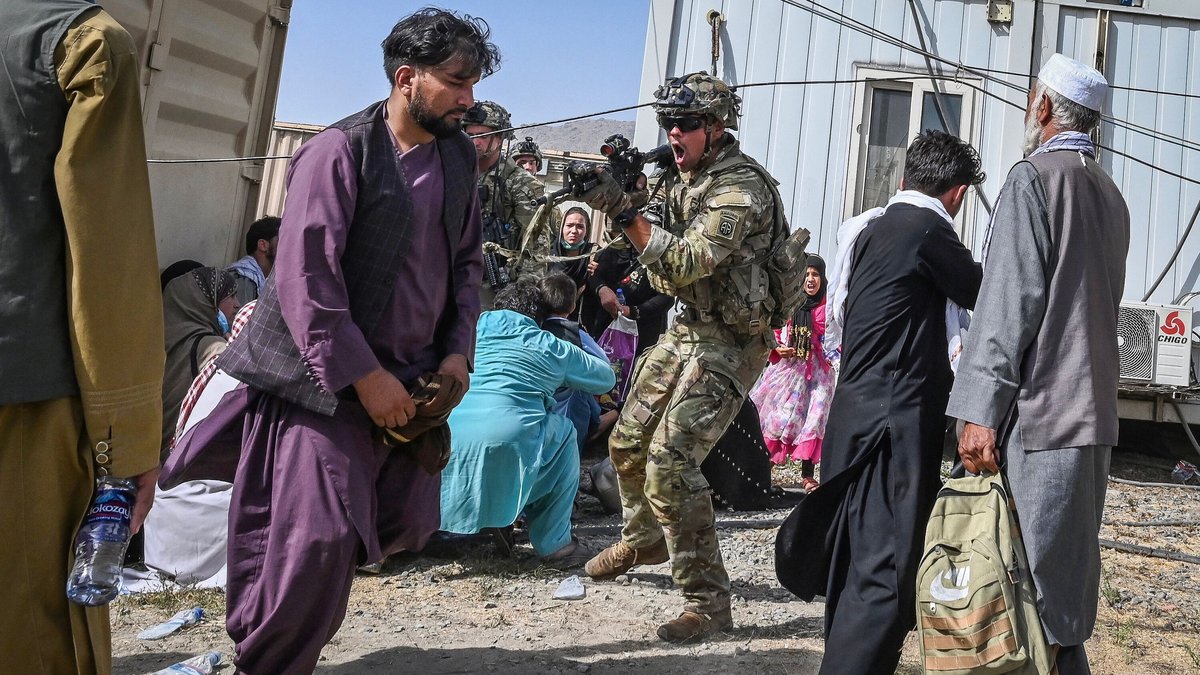
The world shifted on its axis on September 11, 2001. The horrific attacks that day, orchestrated by al Qaeda, launched the United States and its allies into a global conflict termed "The War on Terror." At its heart, this war involved two prolonged, complex, and costly engagements in Afghanistan and Iraq, fundamentally reshaping geopolitics, international relations, and American domestic policy.
Understanding these two distinct yet interconnected theaters of conflict is crucial to grasping the trajectory of the early 21st century. This guide unpacks the motivations, events, and profound consequences of the War on Terror in Afghanistan and Iraq, offering a comprehensive look at what proved to be a far more intricate and enduring struggle than initially envisioned.
At a Glance: The War on Terror in Afghanistan and Iraq
- 9/11's Catalyst: The September 11, 2001, terrorist attacks directly triggered the U.S. "War on Terror."
- Afghanistan First: Operation Enduring Freedom launched in October 2001, targeting al Qaeda, its leader Osama bin Laden, and the Taliban regime that harbored them.
- Iraq Followed: In March 2003, the U.S. invaded Iraq (Operation Iraqi Freedom) based on claims of Weapons of Mass Destruction (WMDs) and links to al Qaeda—claims later proven false.
- Initial Success, Then Insurgency: Both invasions quickly toppled existing regimes, but were followed by fierce, protracted insurgencies and sectarian violence.
- High Costs: By 2008, U.S. troops remained in both nations, with thousands of casualties and hundreds of billions of dollars spent, leading to growing public dissatisfaction.
- Complex Legacy: The wars fundamentally altered the global terrorism landscape, leading to unintended consequences and raising profound questions about intelligence, justification for war, and nation-building.
The Spark: 9/11 and the Immediate Global Response
The images of September 11, 2001, are seared into collective memory: the Twin Towers falling, the Pentagon attacked, a field in Pennsylvania. These devastating acts, masterminded by Osama bin Laden's al Qaeda, killed nearly 3,000 people and brought a stark new reality to the United States. In the immediate aftermath, the president during 9/11, George W. Bush, declared a "War on Terror," vowing to pursue and defeat those responsible and any who harbored them. This declaration set in motion a chain of events that would define the next two decades of U.S. foreign policy, first and foremost focusing on Afghanistan.
Afghanistan: Operation Enduring Freedom and the Long Haul
Afghanistan, a landlocked nation with a history of resisting foreign invaders, quickly became the primary target. For years, it had served as a sanctuary for al Qaeda under the protection of the Taliban regime.
The Taliban's Rise and Al Qaeda's Sanctuary
To understand why Afghanistan was ground zero for the War on Terror, we need to trace its recent past. After a decade-long Soviet occupation (1979-1988), during which the U.S. and Saudi Arabia secretly armed anti-Soviet mujahideen fighters, the country plunged into civil war. Among the young Muslims who flocked to Afghanistan to fight the Soviets was Osama bin Laden, who in 1988 formed al Qaeda ("the base"). While al Qaeda briefly relocated to Sudan, it maintained training camps in Afghanistan and Pakistan.
By the mid-1990s, a new force emerged from the chaos: the Taliban. Primarily Pashtun students from privately funded religious schools (madrassas) teaching fundamentalist Islam, the Taliban swiftly took control of most of Afghanistan by 1996. They implemented an "ultrapurist" form of Islam blended with traditional Pashtun customs, enforcing strict rules: men couldn't shave, women were forced into head-to-toe burkas, and basic entertainment was outlawed. Religious police ensured compliance.
Osama bin Laden returned to Afghanistan in May 1996, forging a close relationship with Taliban leader Mohammed Omar. Bin Laden's focus shifted dramatically after the 1990 Persian Gulf War, when Saudi Arabia, his home country, allied with the U.S. He issued a "fatwa" in 1998, a religious decree, leading to a series of escalating attacks against U.S. interests, culminating in the 9/11 attacks. The UN Security Council had already imposed economic sanctions on the Taliban in 1999 and 2000 for their continued harboring of terrorists.
The Invasion and Initial Success (2001)
Just weeks after 9/11, on October 7, 2001, the U.S. launched Operation Enduring Freedom. The objectives were clear: dismantle al Qaeda, capture or kill Osama bin Laden, and remove the Taliban from power. The operation unfolded in phases:
- Deployment: U.S. forces positioned themselves in neighboring countries like Pakistan and Uzbekistan.
- Air and Special Operations: U.S. air strikes pounded Taliban and al Qaeda targets, while Special Operations teams worked directly with opposition groups like the Northern Alliance on the ground.
- Ground Invasion: A swift ground campaign toppled the Taliban regime. Major cities fell by early December 2001, seemingly achieving the initial military goals. However, both Osama bin Laden and Mohammed Omar managed to escape, leading to a prolonged hunt for their whereabouts.
- Stability Operations: With the Taliban largely defeated, attention turned to stabilizing the country. Hamid Karzai was installed as interim leader on December 22, 2001.
Building a Nation Amidst Insurgency
Following the initial invasion, the International Security Assistance Force (ISAF) was established in December 2001 to secure Kabul. NATO assumed control of ISAF in 2003, gradually expanding its area of responsibility across the country. Part of this effort involved establishing Provincial Reconstruction Teams (PRTs), designed to assist in infrastructure, education, and economic development, aiming to win the "hearts and minds" of the Afghan people.
Despite these efforts, the situation remained precarious. A surprisingly strong insurgency by the Taliban and its sympathizers began to coalesce. By 2006, a significant upswing in militant violence was observed, particularly in southern Afghanistan. This resurgence drew from a mix of former Taliban, local warlords, drug traffickers, and new graduates from fundamentalist madrassas. Critically, these fighters often used Pakistan's Federally Administered Tribal Areas (FATA) as a safe haven, complicating counter-insurgency efforts. By early 2008, the Taliban controlled roughly 10% of Afghanistan, the Afghan government about 30%, with the remaining territory controlled by local tribes.
The Human Cost and Societal Challenges (as of 2008)
Afghanistan, even after seven years of international intervention, remained a deeply impoverished and struggling nation:
- Political Landscape: Hamid Karzai won the 2004 presidential elections, but his government grappled with corruption and limited reach beyond Kabul.
- Education: While 9,500 schools were open, the Taliban actively attacked and destroyed public schools, leading to 35% of schools in southern provinces being closed in 2007. Illiteracy rates remained alarmingly high: 57% for men and 87% for women in 2006.
- Health: The population faced widespread poverty, minimal healthcare access, and high rates of malnutrition. A quarter of Afghans lacked healthcare, and the country suffered from high infant, child, and childbirth mortality rates. A staggering 1 million Afghans were estimated to be drug addicts by 2005.
- Economy & Corruption: Billions in international aid flowed into Afghanistan after 2001, yet wealth was heavily concentrated, and government corruption was rampant. Most citizens lived on less than $2 a day.
- Drug Trade: Ironically, post-2001 Afghanistan became the world's leading producer of opium poppies. In 2007, 193,000 hectares (477,000 acres) were cultivated, generating up to $5,000 per hectare for farmers. A significant portion of this income, about 10% as an "usher" (tax), went to insurgent groups like the Taliban, effectively funding their operations. The opium trade was a $4 billion-a-year industry, accounting for over half of the nation's economic output.
U.S. Investment and Public Sentiment (as of 2008)
The War in Afghanistan incurred significant costs for the United States. From October 7, 2001, to August 2, 2008, 561 U.S. military personnel died (354 from hostile action, 207 non-hostile), with 2,309 wounded in battle. Financial appropriations for the war from FY 2001-2009 totaled $172.6 billion, with the vast majority going to the Department of Defense.
American public opinion on the war was mixed but generally supportive of the mission, albeit with waning enthusiasm. A July 2008 Gallup poll found 46% believed things were going well, while 51% believed they were going badly. Yet, 68% felt sending troops was not a mistake (a decline from 89-93% in 2002/2004). A majority (59%) still favored sending more troops to fight al Qaeda and the Taliban, reflecting a persistent focus on counterterrorism goals.
Iraq: A New Front, Different Justifications
In 2003, the War on Terror expanded dramatically with the U.S.-led invasion of Iraq, opening a second, highly controversial front. This decision was rooted in a different set of justifications than Afghanistan, ones that would later be largely discredited.
Saddam Hussein's Iraq: A Troubled History
Iraq, the ancient land of Mesopotamia, had a long history of internal strife, particularly between its Shiite majority (around 2/3 of the population) and Sunni minority (around 1/3), which dominated its political class. After gaining independence from British rule in 1932, the country eventually saw the rise of the secular Baath Party. By the 1970s, Saddam Hussein had consolidated power as a brutal dictator. His regime engaged in campaigns of extermination against opponents, most notably the Anfal Campaign against the Kurds.
Saddam's history of aggression included the 1980 invasion of Iran, triggering an eight-year war that claimed between 500,000 and 1 million lives. U.S. relations with Iraq were complex; diplomatic ties, severed in 1967, were restored in 1984 as both nations saw Iran as an enemy. This changed dramatically in August 1990 when Iraq invaded Kuwait, leading to international condemnation and UN sanctions. A U.S.-led coalition swiftly liberated Kuwait in Operation Desert Storm in January 1991.
Following that conflict, UN Resolution 687 (April 1991) required Iraq to declare and destroy its Weapons of Mass Destruction (WMDs) under international inspection. Throughout the 1990s, Iraq repeatedly defied and obstructed IAEA inspections, eventually expelling them in 1998, fueling international suspicion.
The Kurds, an ethnic group in northern Iraq, suffered immensely under Saddam. His regime used chemical weapons against them during the Anfal Campaign, killing an estimated 100,000-180,000 people. Post-1991, the U.S., British, and French enforced a no-fly zone over northern Iraq, allowing the Kurds to develop a semi-independent government and their own "Peshmerga" militia.
The Road to War: Misinformation and "Axis of Evil"
In the wake of 9/11, President Bush and some members of his administration began to look at Iraq, arguing for military action due to its "long-standing involvement in terrorism" and "interest in weapons of mass destruction." In January 2002, Bush famously labeled Iraq part of an "axis of evil."
A key justification for war centered on intelligence claims that Iraq was actively amassing WMDs. The "National Intelligence Estimate: Iraq's Continuing Programs for Weapons of Mass Destruction" (October 2002) falsely asserted that Iraq had restarted its nuclear program and possessed new chemical and biological weapons. This intelligence, which significantly influenced public and congressional opinion, was later found by the 2005 Commission on the Intelligence Capabilities of the United States Regarding Weapons of Mass Destruction to be "dead wrong." The commission concluded that the intelligence was based on unreliable informants and forged documents (such as the alleged yellowcake purchase from Niger) and that Iraq had no active WMD program for "quite some time" after 1991.
Crucially, despite the Bush administration's consistent attempts to link Iraq to 9/11 and al Qaeda, intelligence agencies (including the CIA, U.S. State Department, FBI, and Senate Select Committee on Intelligence) found no evidence of an operational connection between Saddam Hussein and al-Qaeda.
The U.S. failed to secure UN approval for military action. While a "Coalition of the Willing" was assembled, only Britain fully supported the U.S. war plan in 2003, with other nations providing minor forces or funds. Major powers like France, Russia, and China openly opposed military intervention without further UN authorization.
Operation Iraqi Freedom (2003)
On March 20, 2003, Operation Iraqi Freedom commenced with a massive "shock and awe" bombardment, followed by a ground campaign. U.S. and British forces quickly overcame Iraqi resistance, leading to the swift collapse of Saddam Hussein's regime. However, the initial victory quickly gave way to widespread mass looting and lawlessness, signaling the beginning of a prolonged and chaotic occupation. Saddam Hussein was captured in December 2003, tried for war crimes, and eventually hanged in December 2006.
The Vortex of Insurgency and Sectarian Conflict
After the invasion, Iraq descended into a campaign of violence by "insurgents" seeking to destabilize the country and expel foreign forces. This was compounded by escalating sectarian violence, particularly between the long-oppressed Shiite majority and the formerly dominant Sunni minority. The February 2006 bombing of the revered al-Askariya Shia Mosque in Samarra became a flashpoint, igniting a bloody civil struggle. By January 2007, the situation was a complex mix of Shia-on-Shia violence, al-Qa'ida attacks (al-Qaeda in Iraq emerged as a significant force), and criminal activity.
The Coalition Provisional Authority (CPA) governed Iraq from May 2003 to June 2004, when it transitioned power to an Iraqi interim government. This led to the drafting of a new constitution and national elections in 2005. Nouri al-Maliki, a Shiite, became Prime Minister in March 2006, but his government struggled with legitimacy, corruption, and the delivery of basic services. For instance, in 2007, the Iraqi government spent negligible amounts of its budget on essential services like electricity (0.06%) and oil (0.03%).
A critical component of the U.S. strategy was to build effective Iraqi Security Forces (ISF). This proved difficult, with 24,500 Iraqi soldiers believed to have deserted in 2007 alone. Further complicating the landscape, Hezbollah, initially opposed to Saddam, urged Iraqis to fight American forces after his fall. Hezbollah formed Unit 3800, training and equipping Iraqi Shiite militias like the Mahdi Army and Asaib Ahl al-Haq in guerrilla warfare and IED use, and providing funds, weapons, and logistical support.
The Surge and Shifting Tides (2007-2008)
By January 2007, with violence at an all-time high and the country teetering on the brink of civil war, President Bush announced "The New Way Forward," widely known as "The Surge." This involved increasing U.S. troop strength by approximately 40,000 personnel. The Surge, combined with a new counterinsurgency strategy and the "Anbar Awakening" (where Sunni tribes turned against al-Qaeda), led to a dramatic decrease in violence by early 2008. While Bush pledged troop reductions by September 2007, the goal for Iraq to assume security in all 18 provinces by November 2007 was not met, with only 9 transitioned by May 2008.
The Deepening Cost and Public Disillusionment (as of 2008)
The War in Iraq exacted an even heavier toll on U.S. forces than Afghanistan. From March 19, 2003, to August 2, 2008, 4,122 U.S. military personnel died (2,586 in combat, 768 non-hostile), and 30,490 were wounded. The financial cost was staggering, with appropriations from FY 2001-2009 totaling $656.1 billion, mostly for the Department of Defense.
Public support for the Iraq War eroded dramatically over time. While 75% believed sending troops was not a mistake in March 2003, by July 2008, only 40% held that view, with 56% believing it was a mistake. A significant majority (60% in February 2008) favored setting a timetable for troop withdrawal. By July 2008, 57% of Americans favored moving U.S. troops from Iraq to Afghanistan, indicating a shift in perceived priorities.
The Broader Echoes of the War on Terror
Beyond the immediate battlefields, the wars in Afghanistan and Iraq had profound and often unintended consequences, reshaping the very nature of the War on Terror.
Reframing the Narrative: Iraq as the "Central Front"
Despite the lack of an operational link, the Bush administration consistently framed the Iraq War as the "central front" in the War on Terror, linking it to 9/11 and claiming Ba'athist Iraq harbored and supported terrorists. This narrative was crucial for maintaining public support for the invasion. To reinforce this, the Pentagon even launched a "military analyst program" in 2002, briefing retired officers to disseminate administration talking points on Iraq to media outlets.
An Unintended Consequence: Increased Terrorism
One of the most sobering outcomes of the Iraq War was the consensus among many intelligence experts and reports that it increased terrorism. The 2004 International Institute for Strategic Studies and the 2005 U.S. National Intelligence Council both asserted that the Iraq War served as a "potent global recruitment pretext" for jihadists and a "magnet for international terrorist activity." Osama bin Laden and al-Qaeda commanders themselves viewed the war as beneficial to their goals, drawing a new generation of fighters into the global jihadist movement.
Unraveling the Deception
As the wars progressed and the initial justifications came under intense scrutiny, questions about public deception grew. A 2008 study found that between September 2001 and September 2003, President Bush and seven senior officials made at least 532 explicit statements falsely linking Iraq to WMDs or al-Qaeda. This was characterized as an "orchestrated campaign" to generate support for war based on "false pretenses." By January 2007, 57% of Americans felt the Iraq War was not part of the War on Terror.
The True Cost of Complexity
The War on Terror in Afghanistan and Iraq highlighted the immense costs—human, financial, and geopolitical—of prolonged military engagements.
- Human Toll: Thousands of U.S. and allied service members died, and tens of thousands were wounded. Civilian casualties in both Afghanistan and Iraq numbered in the hundreds of thousands, leading to widespread displacement and suffering.
- Financial Drain: The combined cost of both wars quickly surpassed a trillion dollars, diverting resources from domestic priorities and contributing to national debt.
- Geopolitical Instability: Instead of stabilizing the region, the invasions often exacerbated existing tensions, fueled sectarian conflicts, and, in Iraq, arguably created new breeding grounds for extremist groups.
- Strain on Military: The protracted engagements placed an enormous strain on the U.S. military, leading to high rates of combat stress, mental health issues, and a weariness that permeated public and congressional dissent. Calls for withdrawal, exemplified by the House passing a resolution in July 2007 for troop redeployment or withdrawal from Iraq, grew louder as the wars dragged on.
Beyond the Battlefield: Lessons in Grand Strategy and Public Trust
The War on Terror in Afghanistan and Iraq represents a pivotal chapter in modern history, one rich with lessons in grand strategy, intelligence failures, and the profound responsibilities of leadership. These complex conflicts demonstrate how initial military successes can quickly give way to intractable insurgencies, how the best intentions can produce unintended consequences, and how the erosion of public trust in intelligence and justifications for war can have lasting ramifications.
The experience underscores the critical importance of:
- Accurate Intelligence: The WMD fiasco in Iraq stands as a stark warning about the dangers of faulty intelligence and the need for rigorous scrutiny, especially when contemplating military action.
- Clear Objectives and Exit Strategies: The challenges in both Afghanistan and Iraq highlight the difficulty of transitioning from military victory to stable nation-building, particularly in societies with deep-seated tribal, ethnic, and religious divisions.
- International Consensus: The limited coalition in Iraq, compared to the broad international support for Afghanistan, demonstrated the value of global solidarity in addressing complex security threats.
- Understanding Local Dynamics: Ignoring the intricate historical, cultural, and political landscapes of these nations proved costly, leading to prolonged conflicts and unforeseen outcomes.
The legacies of these wars continue to unfold, shaping foreign policy debates, military doctrines, and public discourse about intervention and security. For future generations and policymakers, understanding this intricate history is not merely an academic exercise, but a crucial imperative for navigating an increasingly complex global landscape and for upholding the fragile trust between governments and their citizens.