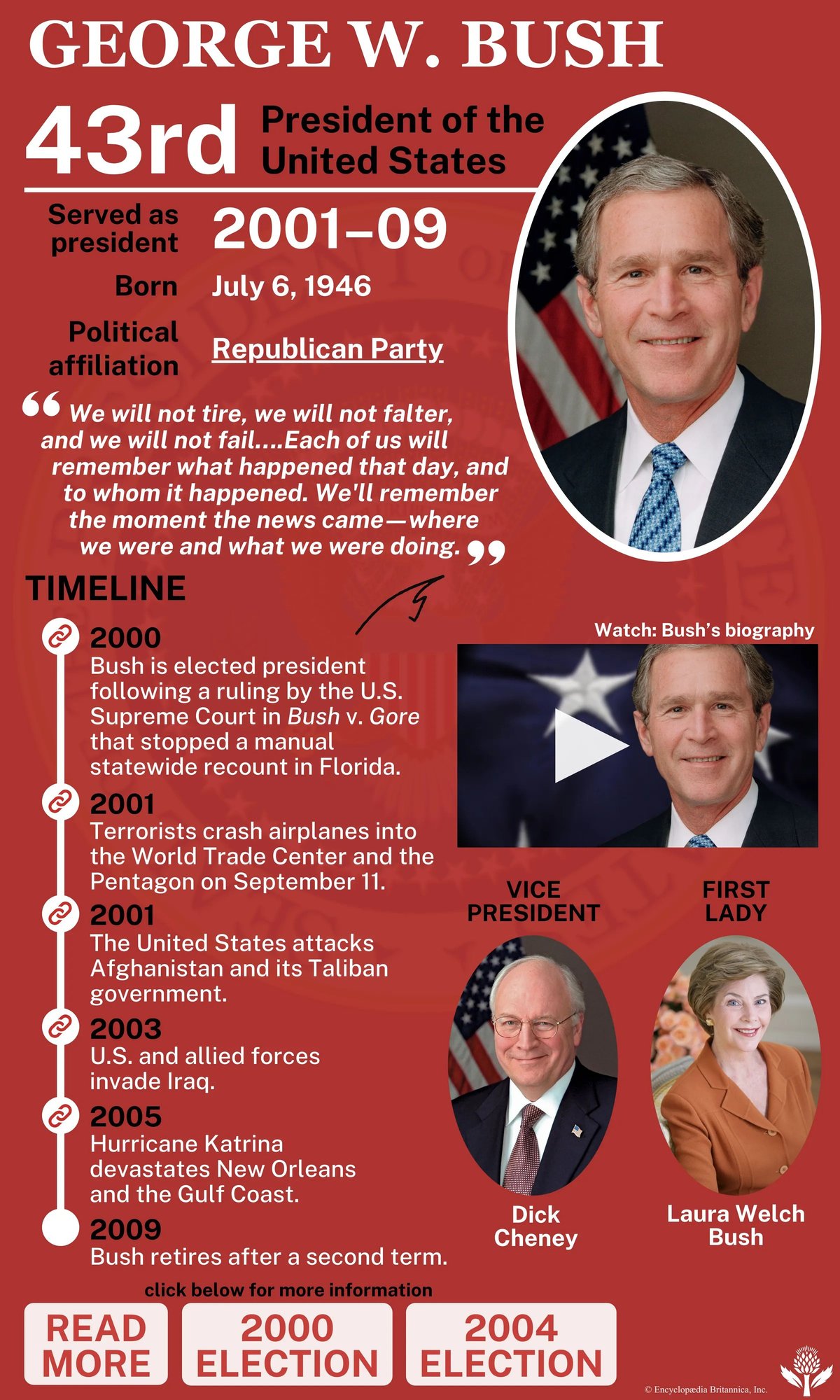
When George W. Bush took the oath of office on January 20, 2001, he stepped into a presidency shaped by a contentious election and brimming with a clear, ambitious domestic agenda. For the first 234 days, before the world irrevocably shifted, Bush’s administration was defined not by war, but by a focused push to deliver on campaign promises centered squarely on American homes, schools, and pocketbooks. This period, often overshadowed by the cataclysmic events that followed, offers a vital glimpse into the "compassionate conservative" vision that Bush brought to the White House.
At a Glance: Bush's Pre-9/11 Presidency
- Contested Start: Began presidency following the highly disputed 2000 election, resolved by Bush v. Gore.
- Major Tax Cuts: Signed the sweeping $1.35 trillion Economic Growth and Tax Relief Reconciliation Act of 2001 into law.
- Social Policy Stances: Reinstated the Mexico City policy and established the White House Office of Faith-Based and Community Initiatives.
- Ethical Debates: Limited federal funding for new embryonic stem cell research in August 2001.
- Early Foreign Policy Shift: Withdrew the U.S. from the Kyoto Protocol in March 2001, signaling a new approach to international agreements.
- Cabinet Diversity: Appointed Colin Powell as the first Black Secretary of State, a significant move towards a diverse leadership team.
The Unsettled Inauguration: Laying the Groundwork
You might remember the palpable tension surrounding Bush's ascent to the presidency. The 2000 election against Democratic Vice President Al Gore was a nail-biter, ultimately decided by the Supreme Court case Bush v. Gore after a contentious recount in Florida. Despite losing the popular vote, Bush secured the Electoral College, setting the stage for a presidency that, at its outset, sought to establish legitimacy and unite a divided nation.
This context is crucial: facing a narrow victory and a politically polarized country, Bush and his team strategically prioritized issues they believed could garner bipartisan support and directly impact everyday Americans. This wasn't a presidency preparing for global conflict; it was one focusing on domestic reform, much in line with the "compassionate conservatism" he championed on the campaign trail.
The Cornerstone: Tax Relief for American Families
One of Bush's earliest and most significant legislative victories perfectly encapsulated his domestic-first philosophy: a massive tax cut. In 2001, early in his first term, he signed a $1.35 trillion tax cut, a substantial reduction in federal individual tax rates. The aim was clear: stimulate the economy, put more money back into people's hands, and fulfill a central campaign promise.
This wasn't just a tweak; it was a sweeping overhaul designed to reduce the tax burden across various income brackets. It represented a fundamental belief in supply-side economics, arguing that lower taxes would encourage investment, job creation, and overall prosperity. The debate was fierce, with proponents arguing for economic freedom and opponents raising concerns about increasing the national debt. Nevertheless, the tax cut passed, becoming a defining feature of the pre-9/11 Bush administration.
Education Reform: A Bipartisan Promise in Progress
Before 9/11 reshaped his presidency, George W. Bush was deeply committed to education reform. While the landmark No Child Left Behind Act wouldn't be signed until January 2002, the groundwork for this ambitious legislation was laid entirely within the pre-9/11 period. Bush campaigned heavily on improving public schools, promising to hold them accountable for student performance.
His administration spent its initial months building support for a federal role in education standards, a concept that traditionally belonged to states and local districts. The push was for standardized testing, greater parental choice, and a focus on disadvantaged students. This commitment to education underscored the domestic nature of his early agenda, seeking to tackle a core societal issue with a mix of federal oversight and local flexibility. The bipartisan negotiations that would eventually lead to NCLB were already well underway, demonstrating a significant investment of presidential capital into improving American schools.
Faith-Based Initiatives and Social Policy
Beyond economics and education, Bush's "compassionate conservative" vision also heavily influenced his administration's approach to social policy, particularly through the lens of faith.
One of his first actions was to reinstate the Mexico City policy (also known as the Global Gag Rule). This executive order blocked federal aid to international non-governmental organizations that performed or counseled on abortions. This move immediately pleased his conservative base, signaling a clear shift from the previous administration's stance and underscoring his commitment to socially conservative principles.
Further cementing this approach, Bush created the White House Office of Faith-Based and Community Initiatives. This office aimed to empower religious charities and community groups, allowing them to compete for federal funding to provide social services. The idea was that these local organizations, often deeply embedded in their communities, could more effectively address issues like poverty, addiction, and homelessness. It was a significant effort to blend government resources with the power of grassroots, faith-driven efforts.
In August 2001, just weeks before the terrorist attacks, Bush made another consequential decision on a hot-button social issue: he banned federal funding for new embryonic stem cell research. While existing cell lines could continue to receive funding, this move placed a significant restriction on a burgeoning area of scientific inquiry, balancing the potential for medical breakthroughs with profound ethical considerations regarding the origin of the stem cells. This decision, made in the quiet of late summer, highlighted the administration's willingness to engage in complex moral debates, again, as part of a domestically focused agenda.
A Shift in Global Posture: Early Foreign Policy Moves
While Bush's presidency before 9/11 was decidedly domestic in its focus, it wasn't entirely devoid of foreign policy signals. These early moves indicated a departure from previous administrations, emphasizing American sovereignty and a re-evaluation of international agreements.
One prominent example was the U.S. withdrawal from the Kyoto Protocol in March 2001. This international treaty aimed to reduce greenhouse gas emissions. Bush argued it was flawed, economically detrimental to the U.S., and didn't hold developing nations to the same standards. This decision, though controversial internationally, resonated with parts of his domestic base and reflected a belief in prioritizing American economic interests.
Another area that saw early attention was the Anti-Ballistic Missile (ABM) Treaty. While the U.S. formally withdrew from the ABM Treaty in December 2001 (after 9/11), the Bush administration's intent to pursue a national missile defense system was clear from the outset. This pre-9/11 period saw the early discussions and policy shifts that would lead to that eventual withdrawal, indicating a move towards a more unilateral approach to national security infrastructure.
However, it's crucial to remember that these were policy adjustments, not preparations for large-scale military engagements. The foreign policy team, led by figures like Secretary of State Colin Powell – notably the first Black person to hold that prestigious office – was focused on resetting relationships and defining America's place in the world through diplomacy and strategic re-evaluation, rather than immediate conflict. This era established Bush as who was president during 9/11, a leader whose early global initiatives aimed to reassert American interests, not necessarily to confront new global threats through military force.
The Pre-9/11 National Security Landscape: Quiet Before the Storm
Looking back, it’s tempting to project post-9/11 realities onto the early months of Bush's presidency. But prior to September 11, 2001, national security, while always a presidential concern, wasn't the dominant, all-consuming focus it would soon become. The ground truth tells us that major legislative responses like the Patriot Act (October 2001) or the creation of the Department of Homeland Security (November 2002) were direct reactions to the attacks.
Before that fateful day, the intelligence community certainly tracked threats, and counter-terrorism was a known challenge. However, it hadn't yet entered the public consciousness as an existential, immediate danger requiring a complete reorientation of government and foreign policy. Bush's administration was operating under the assumption of conventional threats and ongoing diplomatic challenges, not a looming, catastrophic assault on American soil. The focus was still primarily on domestic policy.
Leadership and Public Perception Before the Storm
In the period leading up to 9/11, Bush’s public approval ratings were relatively stable, fluctuating in the low to mid-50s—typical for a new president navigating the initial legislative battles and the aftermath of a divisive election. His image was still being formed, largely around his "compassionate conservative" branding: a leader committed to moral values, fiscal responsibility, and local empowerment.
He was seen as a straight-talker, a man of conviction, and someone eager to bridge divides, even if the partisan trenches remained deep. The controversies that would later plague his administration—the Iraq War, economic downturns, and debates over civil liberties—were not yet on the horizon. This was a time of establishing an identity, pushing a domestic agenda, and setting the course for what was widely expected to be a presidency focused on internal American strength and values.
The Unseen Shift: What This Period Tells Us
Understanding George W. Bush's presidency prior to 9/11 is crucial for appreciating the dramatic pivot that followed. It reveals a leader with a clear vision for domestic reform, actively pursuing tax cuts, education overhauls, and socially conservative policies. It shows an administration finding its feet, defining its priorities, and engaging with the world on its own terms, but without the immediate shadow of global terrorism dictating every move.
This initial chapter of his presidency wasn't a footnote; it was the intended roadmap. The policies enacted and proposed in those 234 days set the foundational tone for what Bush hoped to achieve. While the world would soon demand a different kind of leadership, this period reminds us of the president Bush aimed to be, and the agenda he brought to Washington before history intervened.